Ask a group of students what they can do to help the environment and you’ll get answers fast.
Recycle more.
Use less plastic.
Plant a tree.
Those aren’t wrong answers. But they’re floating. They’re disconnected from any real understanding of why those actions matter, what systems they’re touching, or whether they’re solving the right problem. That gap, between good intentions and grounded understanding, is where sustainability education most often breaks down.
The missing piece is environmental literacy. Not as a unit or a theme week, but as the actual foundation on which sustainability education has to be built on.
The Earth Is Already Running Systems That Work
Here’s something worth sitting with. The natural world has been solving complex problems for a very long time without human intervention. The water cycle moves and cleans water across the entire planet. The carbon cycle helps regulate the conditions that make life possible. Ecosystems build soil, filter water, and stabilize climate, all at the same time, all without us managing it.
Students who understand this see the natural world differently. It stops being a backdrop and starts being something they can actually read. A system with logic, patterns, and feedback loops that respond to change in predictable ways.
That’s the first job of environmental literacy. Helping students see the Earth as a living system rather than a setting.
And it starts with real scientific questions. How does energy from the sun move through an ecosystem? What happens downstream when a watershed changes? What does biodiversity actually do for ecosystem stability and what gets lost when it decreases? These aren’t background questions. They’re the questions that make everything else in sustainability education possible.
Facts Are a Starting Point. Connections Are the Goal.
Scientific knowledge is the entry point, but it’s not the destination.
The shift that really matters, the one that moves a student toward a sustainability mindset, happens when they stop collecting facts and start seeing relationships. The carbon cycle connects to the climate. Climate connects to biodiversity. Biodiversity connects to food systems. Food systems connect to communities.
Some of those connections are quick and visible. Others take time. A change in soil health might not show up in food quality for years. A shift in a local watershed might not register in a community’s water supply until a drought makes it impossible to ignore.
This is systems thinking. And it’s what turns scientific knowledge into genuine understanding. A student who can trace a disruption through multiple parts of the Earth and follow where the effects land is a student who can think seriously about what a response should look like. A student who can’t is stuck with surface-level solutions to problems they haven’t fully seen yet.
The Science Eventually Leads to a Harder Question
Once students can see how Earth’s systems connect, something else becomes visible. The disruptions aren’t distributed evenly.
Some communities face far greater environmental risk than others. Some places are the first to feel what happens when a watershed gets drawn down or a soil system gets depleted. Those patterns don’t show up in the data by accident. They reflect decisions that were made, and the data shows where the consequences landed.
This is where environmental literacy opens into something bigger.
Science explains what’s happening. But it also asks us to look at who had a say in the decisions that produced it, and what is owed to the people who didn’t. Water is one of the clearest places to see this. Climate change is already reshaping where water exists and where it doesn’t. Aquifers are being drawn down faster than rain can restore them. Who has access to clean water? What happens to the communities downstream when the source runs out?
Students who have built real scientific understanding can engage those questions seriously. Students who haven’t are left reacting to headlines. Environmental literacy is what gives them the tools to go deeper and ask better questions.
Understanding Has to Lead Somewhere
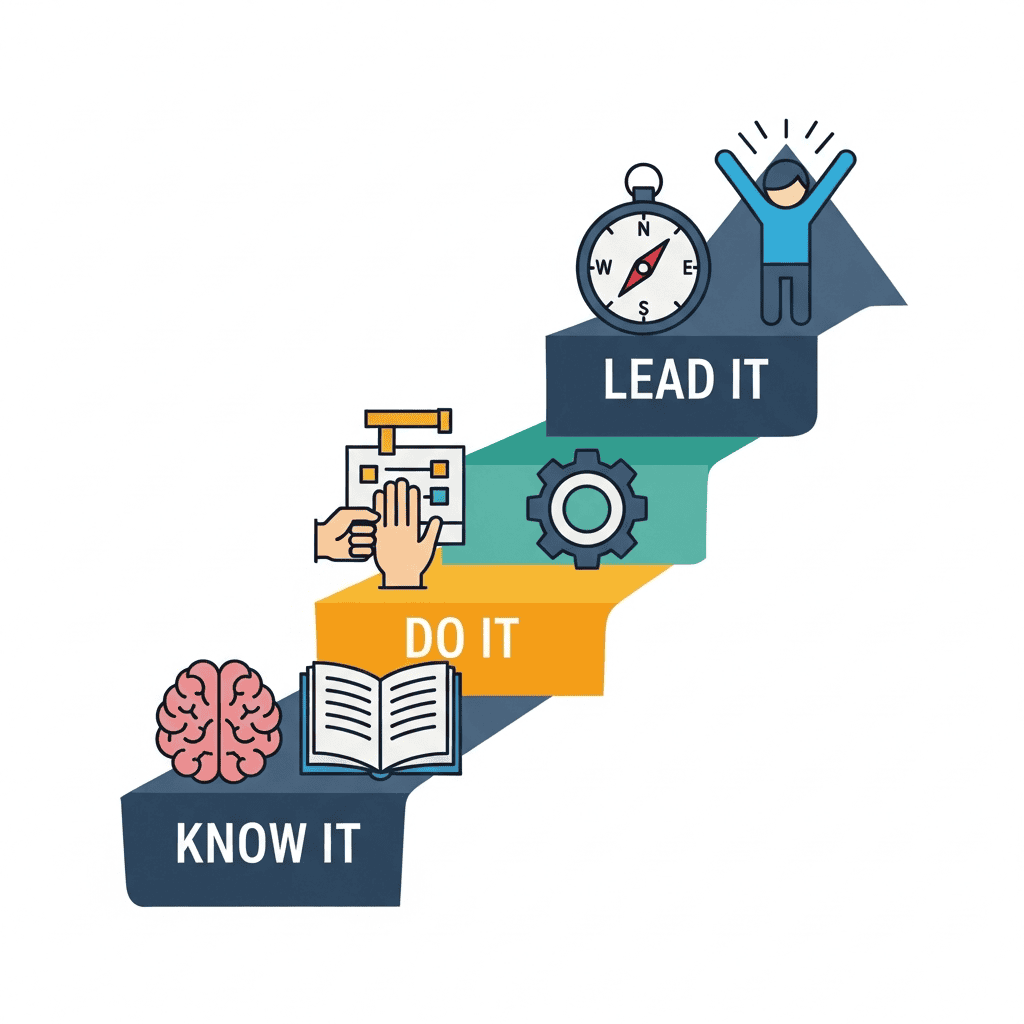
None of this is worth much if it stops at awareness. The whole point of building environmental literacy is to give students something real to do with it.
And here’s where the science gets practical in a very specific way. Not every situation calls for the same response. A system that is still largely intact needs protection. A system under pressure needs careful conservation. A system that has been significantly damaged needs active restoration. Reading which situation you’re actually in, before reaching for a response, is one of the most important skills a scientifically literate student can develop.
Ecosystems can recover when given the right conditions. Students who know that, and who can point to real examples of recovery already happening, see themselves differently in relation to the natural world. Not as helpless observers, but as people who understand how recovery works and have a role in creating the conditions for it.
So Why Does This Have to Come First?
A kindergartner who goes outside after a rainstorm, notices a puddle, watches a worm navigate the wet pavement, and asks what the worm needs to survive is already doing the work. The questions get more precise as students grow. By middle school they’re tracing disruptions across Earth systems and asking who bears the heaviest cost. By high school they’re collecting real data and making the case to real audiences.
But none of that is possible without understanding how the Earth actually works.
You cannot meaningfully address climate change without understanding the carbon cycle. You cannot talk honestly about food justice without tracing what it costs the land and water to produce a meal. You cannot evaluate a conservation strategy without knowing the difference between a system that needs protection and one that needs restoration.
Sustainability education asks students to engage with some of the most complex, urgent challenges of their lifetimes. Good intentions alone won’t get them there. Understanding will.
Environmental literacy is where that understanding begins. And without it, everything else is just a good idea waiting for a foundation.
Want to Learn More?
Take a look at some blogs that can bring sustainability into your classroom.
Miss Makey: Turning Trash to Treasure