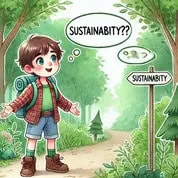
Let me start by saying something that might feel uncomfortable:
Most sustainability education stalls before it even begins.
Not because teachers don’t care. Not because students aren’t ready. But because we skipped the most important first step. We skip defining it for ourselves.
It’s so easy to reach for a ready-made framework.
- UNESCO’s ESD competencies.
- The UN’s Sustainable Development Goals.
These are all valuable! I use them constantly, but none of them can do the foundational work for you. Before any framework can land, you need to know what sustainability actually means in
- your work
- your community
- your classroom
So here’s mine.
Sustainability education teaches students to connect with the world around them, explore the interconnected systems that shape our lives, and lead change they truly believe in. It is a framework that begins with curiosity and develops critical thinking, guiding students from awareness to meaningful action every step of the way.
That definition didn’t show up fully formed. It shifted and sharpened through years of experience — through lessons that flopped, conversations that surprised me, students who pushed back in exactly the right ways. But having it? That changed everything about how I approach this work. It gave me a north star I could actually navigate by.
Your definition doesn’t need to be final. It doesn’t need to be polished or peer-reviewed or ready for a keynote. It just needs to exist.
Here’s why that matters: a personal definition is the thing that makes everything else coherent. It’s what turns a collection of activities into a curriculum with a through-line. It’s what helps you explain to a skeptical administrator why you’re spending time on this. It’s what gives students a sense that there’s a person behind the lessons — someone who actually believes what they’re teaching.
Without it, sustainability education can feel like a checklist. With it, it becomes a lens you carry into everything.
So start there. Even if it’s slow. Even if it shifts. Write something down, sit with it, let your students and your community challenge it. That’s not a sign you got it wrong…that’s the definition doing its job.
Ready to lead your students on this exciting trail map?
Take a look at some blogs that can bring sustainability into your classroom.
Miss Makey: Turning Trash to Treasure