The end of the school year is a lot. Schedules change. Testing puts students on edge. Energy is all over the place, and honestly, so is mine.
So what does a sustainability teacher do when the calendar starts falling apart?
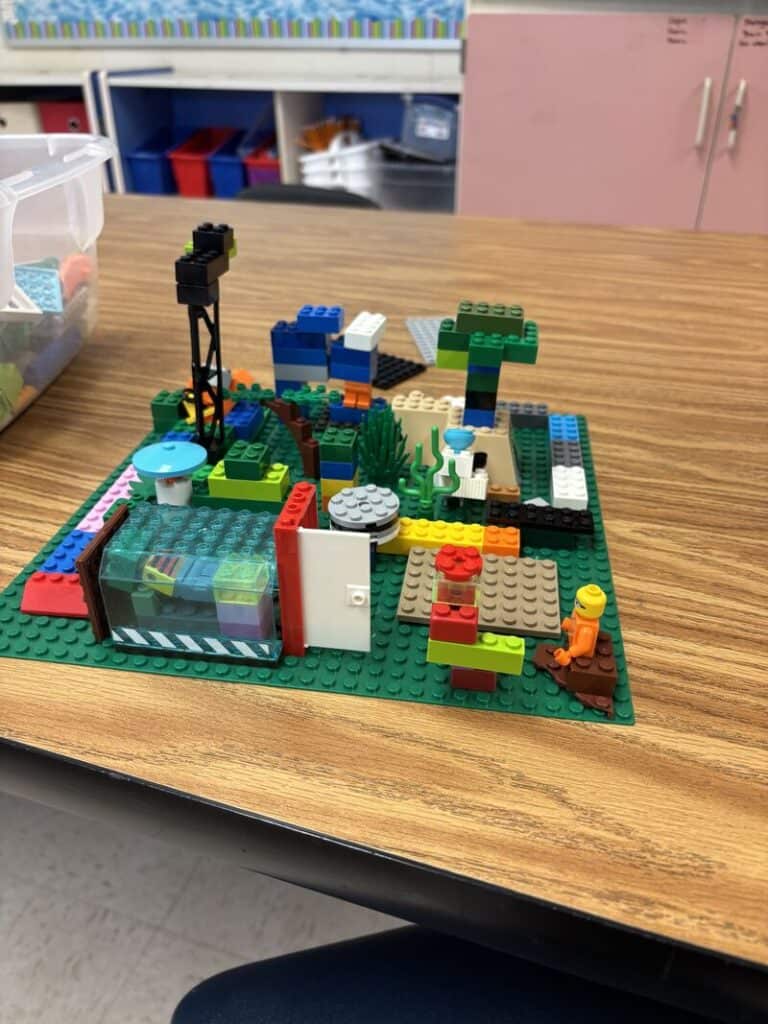
She grabs the Lego bin.
The Idea
I called it Sustainability Island. Students started by building an island with no people on it at all. Just natural resources. Land, water, vegetation, habitat. A place that existed before humans arrived.
Then came the cards.
Each card had a prompt connected to real sustainability ideas we’d been working through all year. Things like:
- How could you create an energy system that moves away from fossil fuels?
- How can you prepare for tourists and their possible waste problems?
- Native plants just got taken over by an invasive species. How do you handle that through the lens of biodiversity and risk management?
Students had to respond to the card by actually building a solution into their island. The Legos weren’t decoration. They were the thinking made visible.
Why It Worked
I’ll be honest, I was mostly trying to survive the last few weeks of school with something meaningful. What I didn’t expect was how much it would show me.
As students built, I walked around and had conversations with them. Not a formal assessment. Just questions. Why did you put the solar panels there? What happens to the waste when the tourists leave? What does your island lose if that invasive species takes over?
The answers told me everything I needed to know about what had actually stuck from our content-heavy units. Students were connecting renewable energy, conservation, waste systems, and biodiversity without being prompted to. They were just… thinking in sustainability.
That’s the goal. That’s always the goal.
The Best Part
One student looked up at me near the end of class and said:
“I’m not sure how you did it, but you made sustainability and Legos go together for a win. Good job, Mrs. Miles.”
I’ll take it.
If you’re a teacher looking for a low-prep, high-engagement way to wrap up a sustainability unit, this one is worth keeping in your back pocket. All you need is a bin of Legos and a handful of good questions.
The students will do the rest.