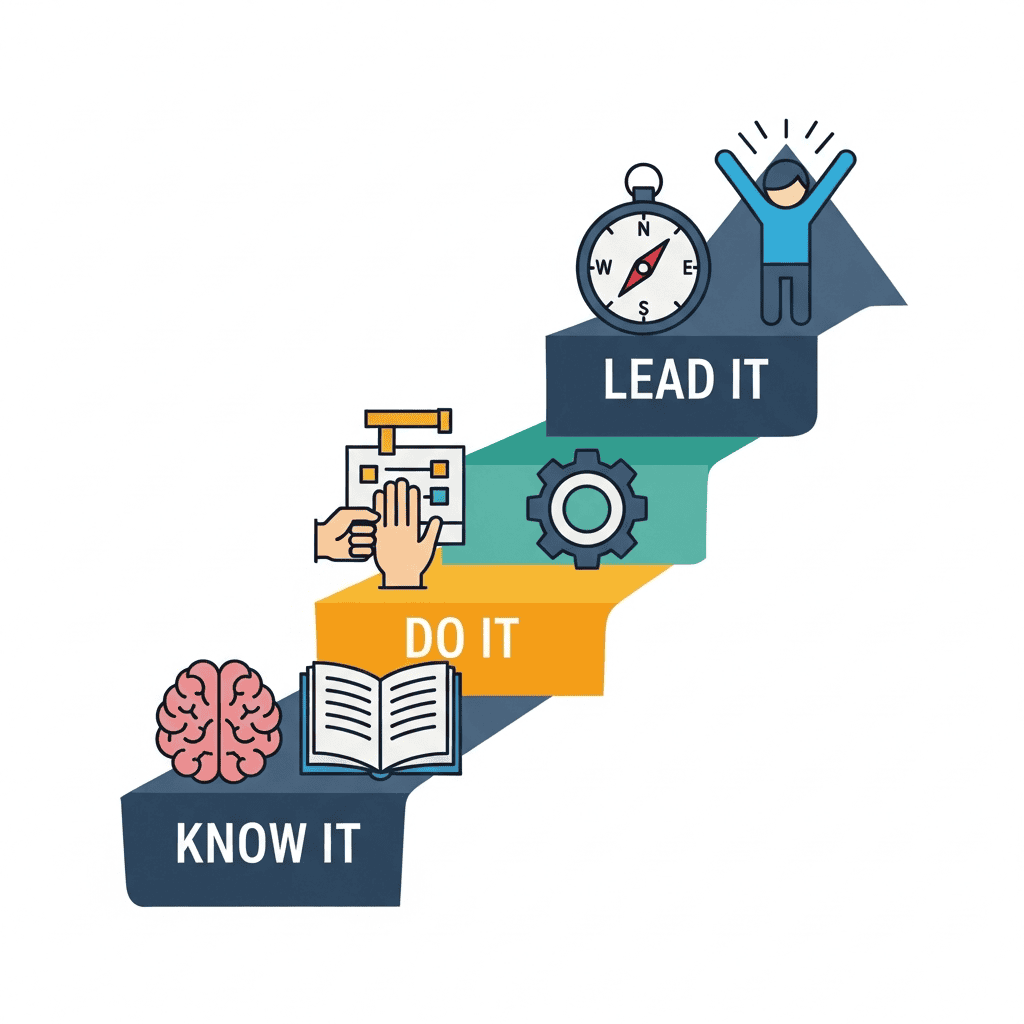
At The Sustainable Classroom Guide, teaching for a greener future is one of the most exciting and rewarding opportunities we have in education. Just like on any successful journey, preparation is key, and I’ve created a simple trail map to guide you. Integrating sustainability into your existing curriculum isn’t adding a burden; it’s enriching learning with relevance and rigor, giving students purpose and innovative skills.
I’ve organized the powerful framework of sustainability learning into three simple and actionable steps. This structure empowers our students to move seamlessly from awareness to impactful action, becoming true leaders for a healthier planet: Know It, Do It, Lead It.
Step 1: Know It — Building the Compass (The Foundation)
Every successful journey starts with a solid map. Know It is all about building that foundational knowledge and understanding that our world is interconnected.
This step anchors three vital areas of learning:
- Understanding Sustainability: I teach students that sustainability is the dynamic balance between the environment, society, and economy. This introduces the power of systems thinking—recognizing that everything interacts.
- Environmental Literacy: This is the science! Students gain awareness of Earth’s systems and biodiversity, understanding how natural processes sustain life.
- Human Impact: I ask the essential question: How do our collective choices affect the environment? This introduces concepts like stewardship and the need for thoughtful design.
By focusing here, I equip students with the essential vocabulary and intellectual curiosity needed to tackle real-world challenges.
Step 2: Do It — Exploring with Purpose (The Application)
Knowledge must transform into action! Do It is where learning becomes active, hands-on, and innovative. Students take the concepts they’ve mastered and apply them through meaningful tasks.
This step covers practical application and discovery:
- Innovation: I put the Engineering Design Process to work. Students use creativity and critical thinking to develop practical, sustainable solutions—whether it’s designing a water conservation plan or reducing lunchroom waste.
- Renewable Energy: Students explore real-world applied science, investigating clean sources and the emerging green careers that are building a resilient, future-proof economy.
- Nature Connection: Through outdoor learning, field studies, and observation, I deepen empathy and understanding. As I know, we protect what we love and understand, making this connection vital for lifelong stewardship.
Step 3: Lead It — Empowering Change Agents (The Outcome)
The final and most exciting step is Lead It. This ensures that classroom learning translates into tangible, positive change in the school and local community. This step is about turning concern into hopeful action.
I focus on building resilient leaders by covering:
- Global Citizenship: Students examine how their personal choices and local actions ripple through global networks, particularly through the lens of economic responsibility and global frameworks like the UN Sustainable Development Goals (SDGs).
- Student Agency: This is the ultimate goal—building resilience, empathy, and confidence. By providing leadership opportunities (e.g., student-led sustainability clubs or community projects), I empower them to be the change agents who build a greener tomorrow.
By structuring sustainability education around this simple, progressive framework—Know It, Do It, Lead It—I take the complexity out of the curriculum and put the power and purpose back into the students’ hands.
Ready to lead your students on this exciting trail map? Take a look at some blogs that can bring sustainability into your classroom.
Miss Makey: Turning Trash to Treasure